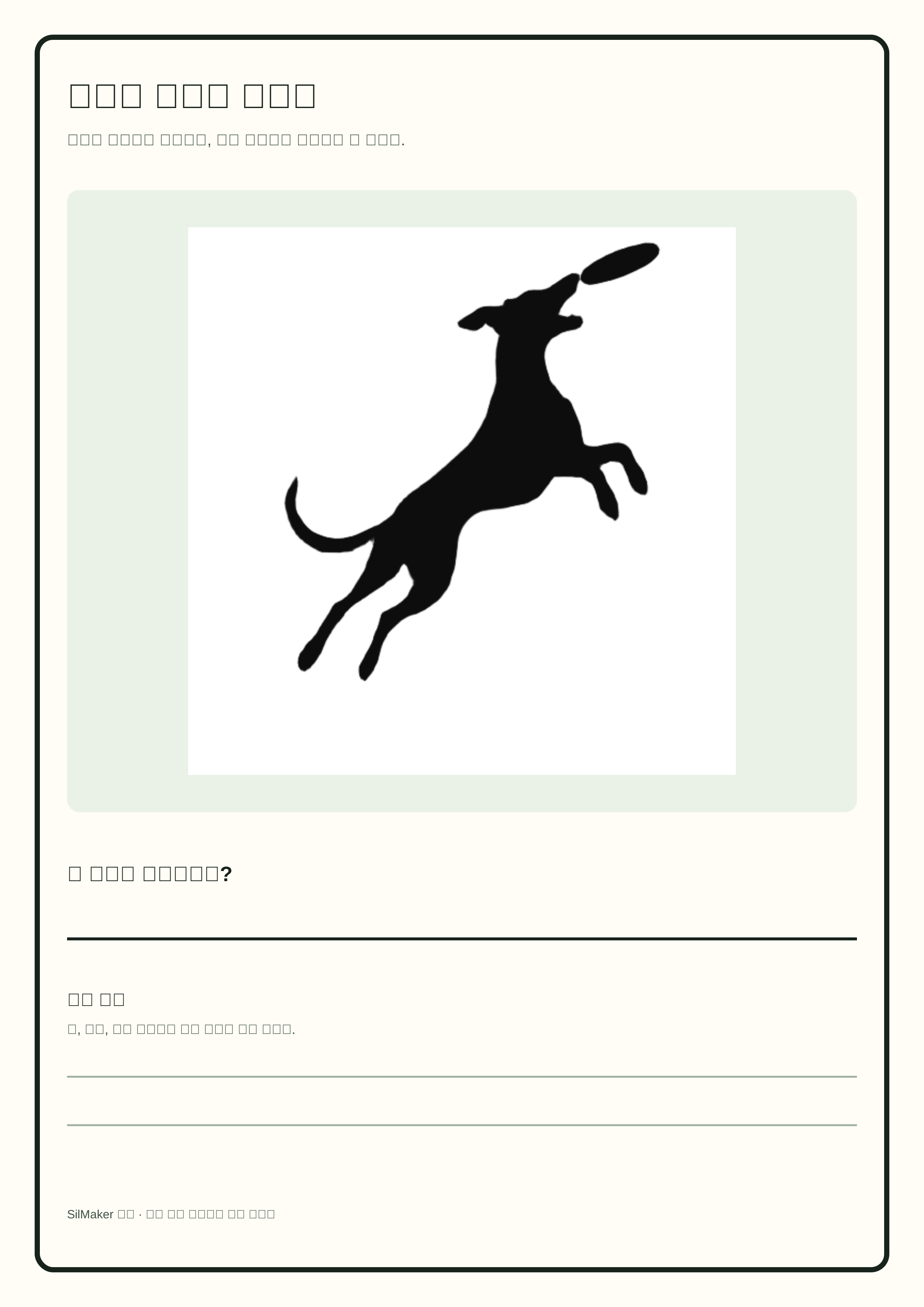
Make an animal silhouette guessing worksheet
A silhouette guessing sheet works when the animal is recognizable from its outer shape, not when it depends on fur pattern or color. This guide separates the SilMaker step from the page-layout step so the downloaded PNG remains traceable to the source image.
Open the free converterChoose an animal with a readable outline
Start with one animal per source image. Ears, legs, tail, beak, or fins should be visible against the background; a tightly cropped face usually makes a weak guessing clue.
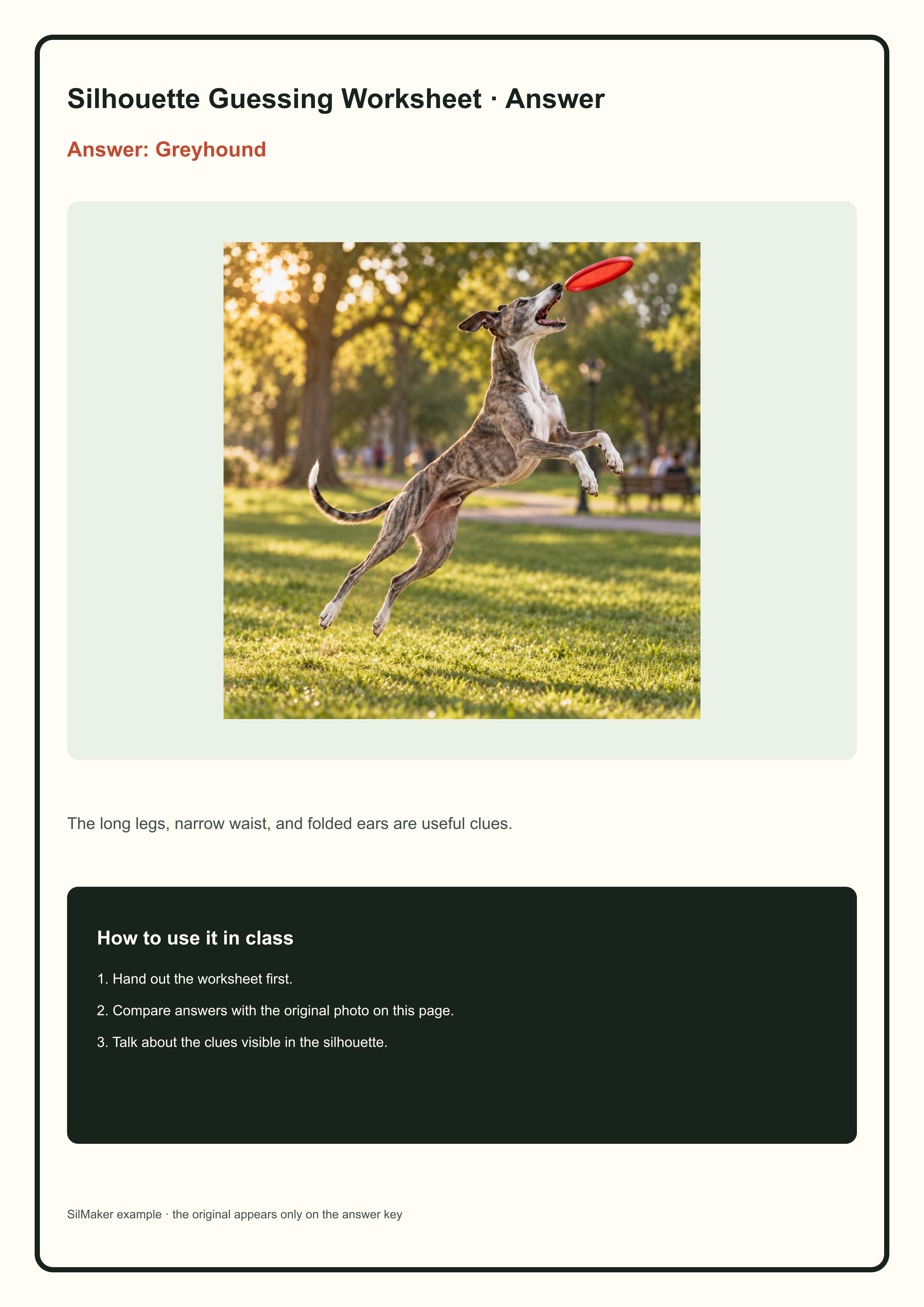
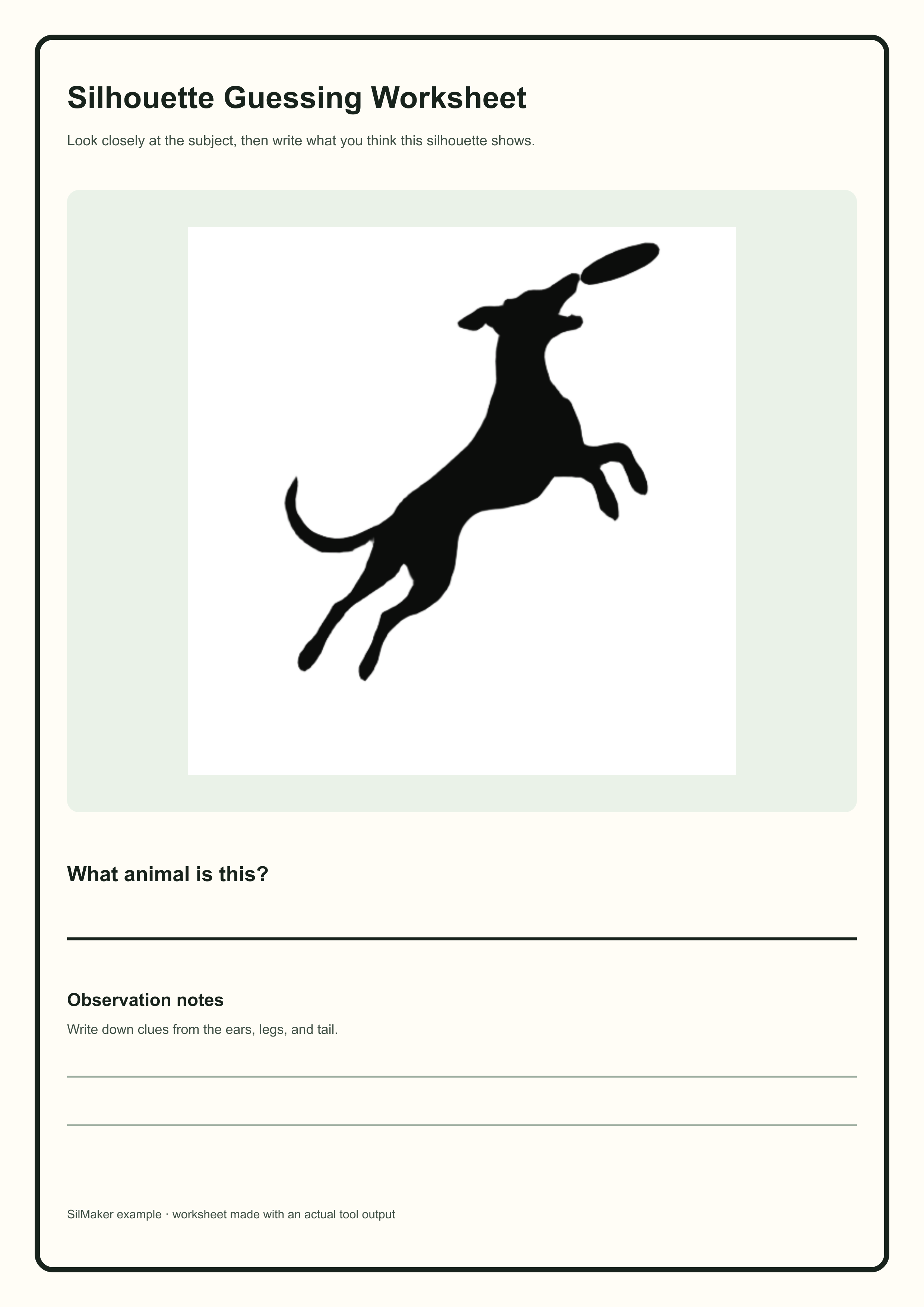
This finished example uses a greyhound leaping for a disc. Its legs and tail make a readable clue, but it represents one documented source, not every animal photograph.
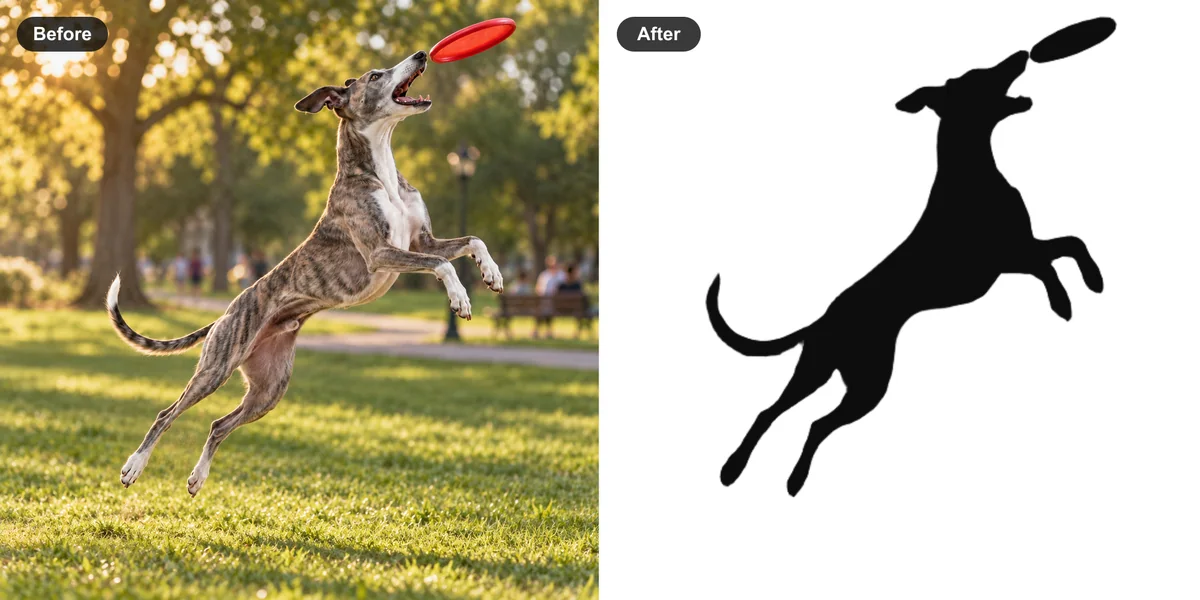
Make and inspect the silhouette
Use one output setting consistently across a set of questions. Mixing white rectangles and transparent files makes later placement harder to control.
If an essential feature is missing, correct the mask in the tool before exporting. Do not draw a new animal shape over the downloaded result and call it an automatic output.
- Open the source in SilMaker and wait for the subject result.
- Choose Filled and a transparent or white background according to the worksheet layout.
- Inspect the tail, paws, and gaps around the body before downloading the PNG.
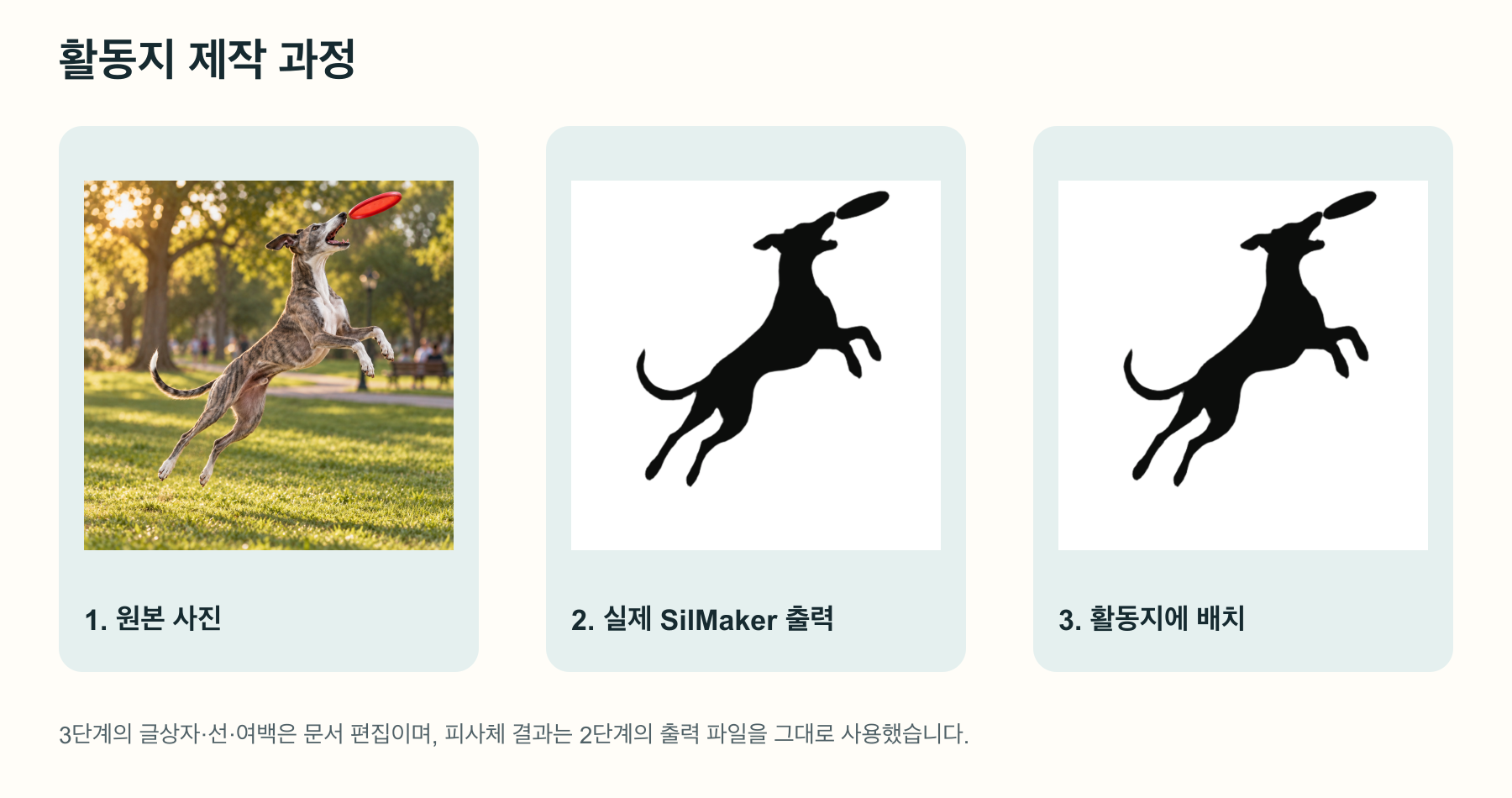
Lay out the activity separately
Place the exported PNG in a document or design editor, add a number and a short prompt such as “Which animal is this?”, then create a separate answer key. This placement step is outside SilMaker; it changes the worksheet page, not the PNG mask.
Keep enough empty space around each silhouette for writing. For print, inspect the final page at its intended size because narrow tails and feet can disappear when reduced.
- One large silhouette per early-reader page.
- Four smaller silhouettes with a numbered answer line.
- A matching answer key using the original animal names, not a recolored replacement image.
State the limits honestly
Silhouettes are clues, not identification tests. Similar breeds, animals with hidden legs, and subjects whose identity relies on markings can produce ambiguous questions.
Use images you created, own, or may reuse. This greyhound park source is a documented original fictional image; do not assume that an image found in search results has the same permission.
Frequently asked questions
Should the worksheet use transparent PNGs?
Use transparent PNGs when the document background may change. A white background is simpler when the worksheet is intentionally white and no later layering is needed.
Can I use the silhouette as the answer image?
Use the original or a clearly labelled photo in the answer key. The silhouette alone does not confirm a specific species or breed.